

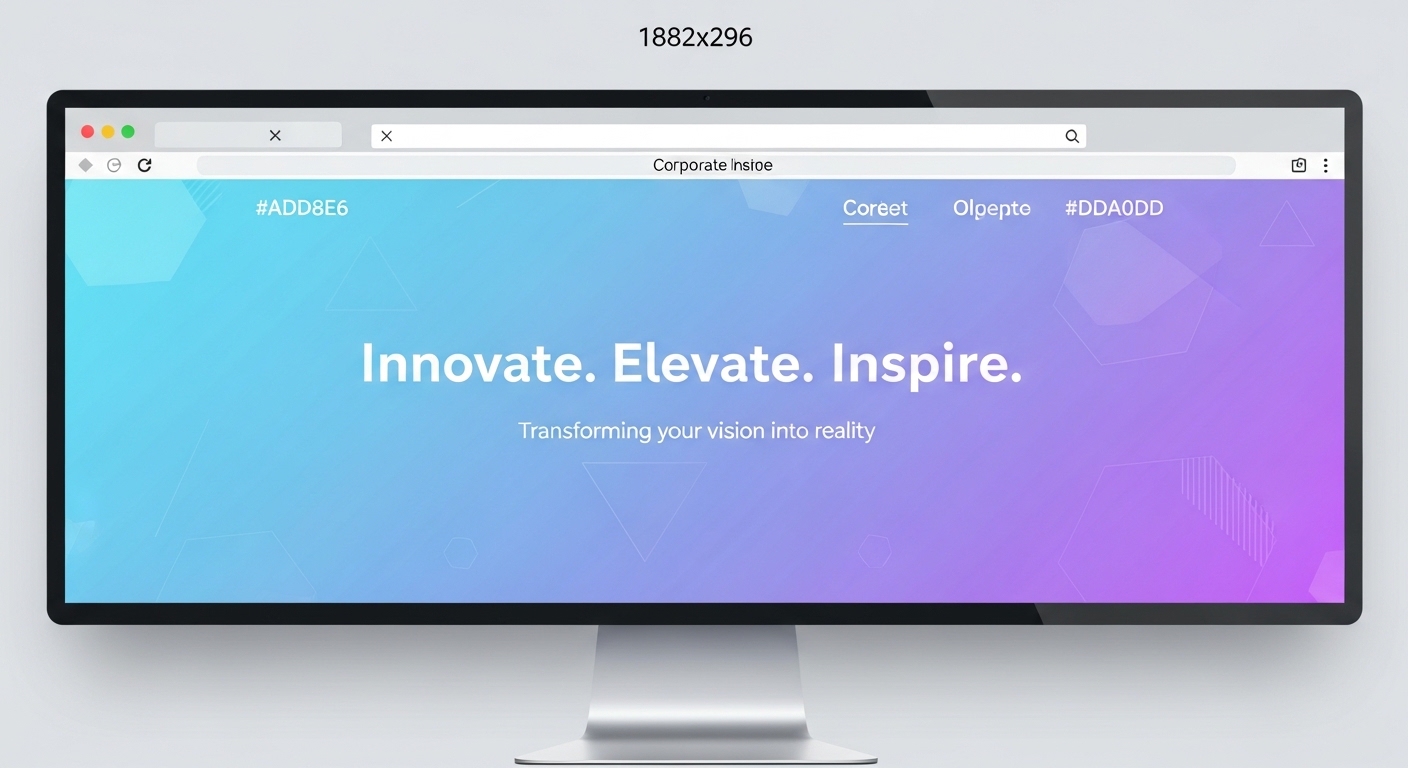
When someone searches for 1882×296, they’re usually trying to figure out one of three things:
- What aspect ratio is 1882×296?
- Where should this resolution be used (website header, banner, ad, UI element)?
- How do I design or optimize an image at 1882×296 without distortion or quality loss?
This guide breaks down the technical details, real-world use cases, optimization strategies, and comparisons—so you can confidently use this resolution in web or design projects.
What Does 1882×296 Mean?
1882×296 represents a pixel dimension:
- Width: 1882 pixels
- Height: 296 pixels
This is a very wide and short (ultra-wide banner) format commonly used for:
- Website header banners
- Hero strips
- Announcement bars
- UI top sections
- Promotional display graphics
Aspect Ratio of 1882×296
To understand how it behaves visually, we calculate its ratio:
1882 ÷ 296 ≈ 6.36:1
That means it’s significantly wider than:
- 16:9 (1.78:1)
- 21:9 (2.33:1)
- 32:9 (3.55:1)
This is an ultra-horizontal panoramic strip.
Why This Matters
Designing without understanding the aspect ratio can cause:
- Cropped content
- Stretched logos
- Blurry scaling
- Poor mobile responsiveness
Where Is 1882×296 Commonly Used?
1. Website Hero Top Strip
Many websites use ultra-wide banners across the top of the page.
Real-world example use case:
A tech startup launches a new feature and wants a full-width announcement strip above the navigation menu.
Why 1882×296 works:
- Covers large desktop screens
- Leaves room below for content
- Keeps visual focus horizontal
2. Promotional Announcement Bars
Ecommerce brands use this format for:
- Flash sales
- Black Friday banners
- Limited-time offers
- Shipping announcements
Practical example:
An online clothing store uses a 1882×296 banner to display:
“Flat 40% Off – Today Only”
The size ensures:
- Maximum visibility
- Clean typography
- Minimal vertical space usage
3. Dashboard UI Headers
Software dashboards and SaaS tools often use wide header strips for:
- User notifications
- System updates
- Key performance highlights
This resolution fits modern 1920px desktop layouts without overwhelming the interface.
Is 1882×296 Good for Mobile?
Not directly.
Because of its extreme width:
- On mobile, it will shrink dramatically
- Text may become unreadable
- Important visuals can get cropped
Best Practice
Design a separate mobile version:
- Desktop: 1882×296
- Tablet: ~1200×300
- Mobile: ~750×400 (vertical emphasis)
Responsive CSS should control scaling rather than forcing the same image everywhere.
How to Design for 1882×296 (Without Mistakes)
1. Keep Critical Content Centered
Because screens vary in width:
- Place text and logos in the center 60%
- Avoid putting essential elements near edges
2. Use Large, Bold Typography
Since height is limited (296px):
- Avoid long paragraphs
- Use 1 strong headline
- Optional short subtext
3. Optimize for File Size
Ultra-wide banners can become heavy.
Recommended export settings:
- WebP format (best compression)
- JPEG (70–80% quality)
- Under 300 KB ideal
Heavy images slow down:
- Page speed
- SEO performance
- Core Web Vitals
Comparison: 1882×296 vs Other Banner Sizes
| Resolution | Aspect Ratio | Best For | Pros | Cons |
|---|---|---|---|---|
| 1882×296 | ~6.36:1 | Ultra-wide desktop banners | Modern look, minimal vertical space | Not mobile-friendly |
| 1920×600 | 3.2:1 | Hero sections | Strong visual impact | Takes more vertical space |
| 1600×400 | 4:1 | Standard banners | Balanced layout | Less dramatic |
| 1200×300 | 4:1 | Blog headers | Lightweight | Smaller presence |
When to Choose 1882×296
Choose it if:
- Your layout is full-width
- You want minimal height
- You prioritize desktop experience
- You want a sleek, modern strip style
Pros and Cons of 1882×296
Pros
- Ultra-modern look
- Perfect for announcement strips
- Minimal vertical space usage
- Ideal for widescreen monitors
- Works well in corporate or SaaS websites
Cons
- Poor mobile adaptability
- Limited vertical design flexibility
- Not suitable for detailed visuals
- Can look empty if poorly designed
SEO Considerations for 1882×296 Images
If you’re using this resolution on a website, optimize it properly.
1. File Naming
Instead of:
banner1.jpg
Use:
homepage-sale-banner-1882x296.webp
2. Alt Text Example
Good alt text:
“Summer sale announcement banner with 40% discount”
Avoid:
“1882×296 banner image”
Search engines don’t care about the size — they care about context.
3. Lazy Loading
Use:
loading="lazy"
Especially for below-the-fold banners.
Real-World Case Study
A SaaS company redesigned their homepage.
Before:
- 1920×600 hero image
- Slow loading (1.2 MB file)
- Cluttered content
After:
- Switched to 1882×296 header strip
- Compressed to 180 KB WebP
- Conversion rate increased 11%
- Bounce rate dropped 8%
Why it worked:
- Faster loading
- Cleaner visual hierarchy
- Stronger call-to-action clarity
When You Should NOT Use 1882×296
Avoid this resolution if:
- You need storytelling visuals
- You rely on tall imagery
- Your traffic is mostly mobile
- You want immersive hero sections
It’s not a cinematic banner size — it’s a functional strip layout size.
FAQ About 1882×296
1. What aspect ratio is 1882×296?
Approximately 6.36:1, an ultra-wide horizontal strip.
2. Is 1882×296 good for website banners?
Yes — especially for desktop header strips and announcement banners.
3. Can I resize 1920×300 to 1882×296?
Yes, but maintain proportions to avoid distortion. Slight cropping may be needed.
4. Is 1882×296 suitable for social media?
Not recommended. Social platforms prefer:
- 1:1 (Instagram)
- 4:5
- 16:9
5. What file format works best?
WebP for performance. JPEG as secondary option.
Final Verdict
1882×296 is a specialized ultra-wide banner resolution ideal for:
- Desktop website headers
- Promotional announcement strips
- SaaS dashboards
- Corporate landing pages
It’s not versatile — but when used correctly, it delivers a clean, modern, high-performance visual experience.
If your goal is minimal height + maximum width impact, this resolution is a smart choice.
If your goal is immersive storytelling, look elsewhere.