

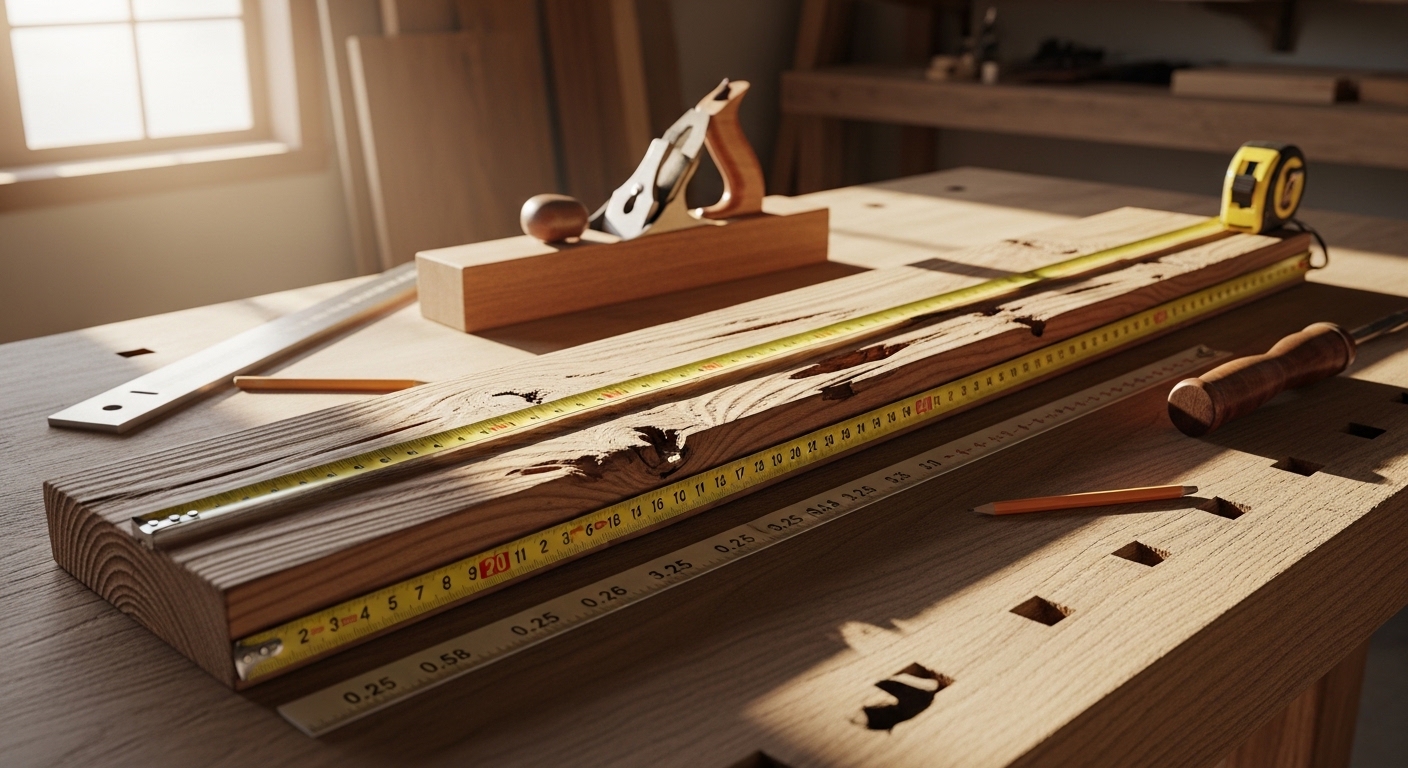
When you encounter the term 0.58×3.25, it often sparks curiosity: is it a measurement, a mathematical calculation, or a product specification? Understanding this number combination requires looking at its context—whether in construction, manufacturing, design, or general math. This article breaks down what 0.58×3.25 means, how it’s used, and practical scenarios where it applies.
Likely Search Intent Behind 0.58×3.25
Users searching for 0.58×3.25 generally have one of the following intents:
- Mathematical Calculation: People want to compute the product of 0.58 multiplied by 3.25.
- Measurement Conversion: Those in construction, woodworking, or DIY projects often need to understand this dimension in inches, centimeters, or other units.
- Product Specification: Some users may encounter 0.58×3.25 on packaging, tools, or parts, looking to understand dimensions for compatibility or selection.
Based on this, the article addresses both the mathematical aspect and the practical usage scenarios.
Calculating 0.58×3.25
At its core, 0.58×3.25 is a simple multiplication problem. Let’s compute it step by step for accuracy:
- Multiply 0.58 by 3:
0.58×3=1.74 - Multiply 0.58 by 0.25:
0.58×0.25=0.145 - Add the two results:
1.74+0.145=1.885
Therefore, 0.58×3.25 = 1.885.
This simple calculation is often the first reason users search for this term—they need a precise decimal value for measurements, formulas, or conversions.
Practical Uses of 0.58×3.25
1. Construction and Carpentry
In woodworking or construction, 0.58×3.25 inches could describe the cross-section of a beam, trim, or panel. For instance:
- Trim work: A molding strip might have a thickness of 0.58 inches and a width of 3.25 inches.
- Wood panels: Small shelving or drawer pieces may use boards of these dimensions.
Knowing the exact product of 1.885 inches can help you calculate area, volume, or required materials.
2. Manufacturing and Engineering
In industrial contexts, 0.58×3.25 might represent:
- Metal strips: For fabrication, metal sheets of 0.58 inches thick and 3.25 inches wide.
- Plastic components: Molded parts often require precise measurements, where 0.58×3.25 could define slots, grooves, or fittings.
Accurate multiplication ensures the right material quantity is ordered and reduces waste.
3. Math and Education
Students or professionals encountering 0.58×3.25 in textbooks or calculations need the value to solve problems:
- Area calculation: If you have a rectangle with sides 0.58 units and 3.25 units, the area = 1.885 square units.
- Scaling problems: Designers and engineers frequently scale models or diagrams, requiring precise multiplication of decimal dimensions.
Comparison With Similar Dimensions
It helps to understand 0.58×3.25 in relation to other common measurements:
| Dimension (in inches) | Area (sq in) | Use Case Example |
|---|---|---|
| 0.5 × 3 | 1.5 | Small trims or shelves |
| 0.58 × 3.25 | 1.885 | Medium trim, minor fabrication |
| 0.6 × 3.5 | 2.1 | Slightly thicker boards, panels |
Insight: The small differences in decimal measurements significantly impact material usage, cutting plans, or product fit in construction and engineering.
Pros and Cons of Using Exact Decimal Dimensions
Pros:
- Precision: Exact measurements ensure accurate material cutting and reduced errors.
- Material efficiency: Prevents over-ordering or wastage.
- Standardization: Aligns with industry norms in woodworking, engineering, and fabrication.
Cons:
- Complexity: Decimals like 0.58×3.25 may require calculators or conversion for practical use.
- Rounding issues: Slight rounding errors can accumulate in large-scale projects.
- Limited availability: Sometimes materials may not be available in exact decimal dimensions, requiring adjustments.
FAQ About 0.58×3.25
Q1: What is 0.58×3.25 in centimeters?
- 0.58 inches ≈ 1.473 cm, 3.25 inches ≈ 8.255 cm, so the rectangle area ≈ 12.16 cm².
Q2: How do I use 0.58×3.25 in woodworking projects?
- Measure carefully, cut with precision tools, and verify the final fit. Ideal for trim, panels, or small furniture parts.
Q3: Can I round 0.58×3.25 for easier calculation?
- Yes, rounding to 0.6×3.25 or 0.58×3.3 can simplify, but always consider tolerance and accuracy for the project.
Q4: Is 0.58×3.25 a standard dimension?
- Not universally standard; often custom for specific materials, tools, or designs.
Q5: How do I calculate material needed if I have multiple pieces of 0.58×3.25?
- Multiply the area of one piece (1.885 sq in) by the number of pieces to get total material requirement.
Conclusion
The term 0.58×3.25 can refer to a simple multiplication, a measurement, or a product specification depending on context. Its calculated value, 1.885, is useful in construction, engineering, design, and educational purposes. Understanding this dimension, comparing it to similar sizes, and applying it practically ensures efficiency, accuracy, and successful project outcomes.
Whether you’re a DIY enthusiast, professional carpenter, or student solving math problems, mastering 0.58×3.25 gives clarity and precision for your tasks.