

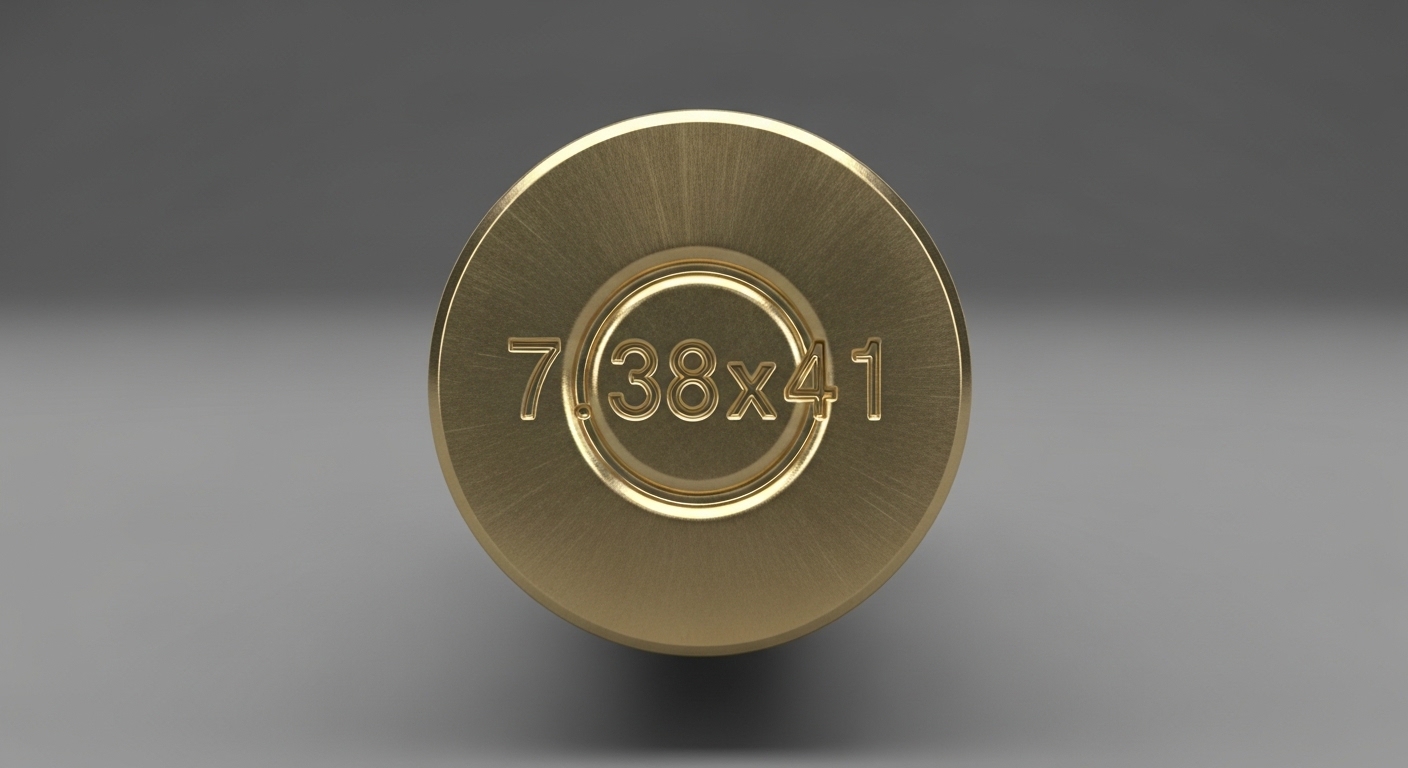
The term 7.38×41 looks like the name of a firearm cartridge. At first glance, it follows the same pattern used to describe many well-known types of ammunition. However, when we examine official records, military documents, and ammunition catalogs, there is no widely recognized or standardized cartridge known as 7.38×41.
This article explains what 7.38×41 appears to mean, why it may cause confusion, how cartridge naming systems work, and what historically documented cartridges it might be mistaken for. Everything here is based on verified information and established firearm history.
What Does 7.38×41 Mean?
In ammunition terminology, a name like 7.38×41 usually follows a standard format:
- The first number (7.38) refers to the bullet’s diameter in millimeters.
- The second number (41) refers to the length of the cartridge case in millimeters.
So, if 7.38×41 were a real cartridge, it would mean:
- A bullet that is 7.38 mm wide.
- A case that is 41 mm long.
However, no major military, commercial, or historical ammunition manufacturer has officially produced a cartridge under the designation 7.38×41.
Is 7.38×41 a Real Cartridge?
Based on available firearm and ammunition records, 7.38×41 is not a documented standard cartridge used by any military or civilian firearm system.
There are no:
- Official military adoption records
- Commercial ammunition production listings
- Recognized firearm chamberings
- Sporting or hunting references
Because of this, 7.38×41 is likely:
- A typographical error
- A misunderstanding of another cartridge
- A mislabeling
- Or a fictional or mistaken designation
Understanding this helps avoid confusion when researching ammunition types.
Common Cartridge Naming Patterns
To better understand 7.38×41, it helps to look at how real cartridges are named.
Metric Cartridge Format
Many modern cartridges use a metric naming system. For example:
- 9×19 mm
- 7.62×39 mm
- 5.56×45 mm
The structure is simple:
Bullet Diameter x Case Length
If 7.38×41 followed this rule, it would represent a 7.38 mm bullet in a 41 mm long case. But again, no official cartridge matches this exact specification.
Why 7.38×41 May Be Confused with 7.62×41
One possible source of confusion is the historically documented 7.62×41 mm cartridge.
The 7.62×41 mm Background
During the early development of intermediate cartridges in the 1940s, the Soviet Union experimented with a cartridge that measured 7.62 mm in diameter and approximately 41 mm in case length.
However, this cartridge was later shortened and standardized as the well-known 7.62×39 mm cartridge.
It is possible that 7.38×41 is a mistaken version of 7.62×41, especially since:
- 7.62 mm is a very common bullet diameter.
- 41 mm case length existed in early experimental designs.
- The numbers are visually similar and easy to misread.
Understanding Bullet Diameter Differences
Another reason 7.38×41 is unusual is the bullet diameter.
Standard Bullet Diameters Around 7 mm
Common bullet diameters include:
- 7.62 mm
- 7.92 mm
- 7.65 mm
- 7.5 mm
However, 7.38 mm is not a commonly standardized bullet diameter in modern cartridge classification systems.
Even though measurements can vary slightly depending on rifling or manufacturing standards, official cartridge names rarely use 7.38 mm as a designation.
This makes the term 7.38×41 even more unlikely to represent a standardized round.
How Cartridge Dimensions Are Standardized
Cartridges are not casually named. They are documented and standardized by organizations such as:
- SAAMI (Sporting Arms and Ammunition Manufacturers’ Institute)
- CIP (Commission Internationale Permanente)
These organizations define:
- Bullet diameter
- Case length
- Overall cartridge length
- Pressure limits
- Chamber dimensions
Since 7.38×41 does not appear in official SAAMI or CIP listings, it is not recognized as a standard cartridge.
Could 7.38×41 Be a Custom or Wildcat Cartridge?
In the firearms world, there are also “wildcat” cartridges.
What Is a Wildcat Cartridge?
A wildcat cartridge is:
- Custom-designed
- Not officially standardized
- Often created by modifying existing cartridge cases
Even in the wildcat community, however, there is no well-documented example of a cartridge known as 7.38×41.
While it is technically possible that someone may have experimented with such dimensions privately, there is no verified or widely recognized cartridge by this name.
Measurement Variations and Rounding
Sometimes cartridge names do not exactly match their true measurements.
For example:
- A cartridge labeled 7.62 mm may actually measure slightly different in practice.
- Imperial and metric conversions can cause rounding differences.
But 7.38 mm is not simply a rounding of 7.62 mm. The difference is large enough that it would represent a distinctly different bore size.
This further supports the conclusion that 7.38×41 is not a standard or recognized designation.
The Importance of Accurate Cartridge Identification
Using the correct cartridge name is extremely important for safety.
Firearms are designed for very specific:
- Chamber dimensions
- Pressure tolerances
- Case shapes
Even small measurement differences can cause:
- Feeding issues
- Extraction problems
- Dangerous pressure increases
That is why verified and standardized naming matters.
Because 7.38×41 does not appear in recognized documentation, it should not be treated as an established ammunition type.
Historical Context: Intermediate Cartridges
Although 7.38×41 is not official, its structure resembles early intermediate cartridges developed in the mid-20th century.
Intermediate cartridges were designed to:
- Be lighter than full-power rifle rounds
- Offer better control in automatic fire
- Provide moderate range and recoil
Examples of real intermediate cartridges include:
- 7.62×39 mm
- 5.56×45 mm
- 5.45×39 mm
These follow standardized naming rules and are well documented in military history.
7.38×41 does not appear in that history.
Possible Reasons the Term Appears
There are several possible explanations for the appearance of 7.38×41:
1. Typing Error
Someone may have accidentally written 7.38 instead of 7.62.
2. Misreading Printed Text
Old documents can be hard to read, especially if scanned or copied.
3. Fictional or Game Reference
Sometimes fictional stories or video games use numbers that resemble real cartridges but are not historically accurate.
4. Informal Internet Usage
Online discussions sometimes repeat incorrect information without verification.
Regardless of the source, there is no verified historical record confirming 7.38×41 as an official cartridge.
How to Verify Cartridge Information
If you encounter a cartridge name like 7.38×41, you can verify it by:
- Checking official ammunition manufacturer catalogs.
- Looking at SAAMI or CIP standard lists.
- Searching military archives.
- Consulting recognized firearm reference books.
If it does not appear in those sources, it is likely unofficial or incorrect.
Why Precision Matters in Ammunition Naming
Precision is essential in firearm systems. A difference of even 0.1 mm can affect:
- Chamber pressure
- Headspace
- Feeding reliability
- Extraction performance
Because of this, official cartridge names are not random. They are carefully documented and standardized.
Since 7.38×41 lacks this documentation, it should not be considered an established or safe cartridge designation.
Comparing 7.38×41 to Known Cartridge Structures
If we analyze the structure purely from a measurement perspective:
- 7.38 mm diameter is unusual.
- 41 mm case length existed historically in early experimental forms (though mainly at 7.62 mm).
- No official pairing of 7.38 mm and 41 mm has been documented.
This combination strongly suggests confusion with other documented cartridges rather than a unique, recognized round.
Final Assessment of 7.38×41
After reviewing historical records, cartridge standards, and ammunition documentation, the conclusion is clear:
7.38×41 is not a recognized, standardized, or officially documented firearm cartridge.
It most likely represents:
- A mistaken reference
- A typographical variation
- Or confusion with the early 7.62×41 experimental cartridge
Understanding this prevents misinformation and promotes safe, accurate knowledge about ammunition.
FAQs About 7.38×41
1. Is 7.38×41 a real cartridge?
No, it is not a recognized or standardized firearm cartridge.
2. Was 7.38×41 ever used by a military?
There is no documented military adoption of a cartridge named 7.38×41.
3. Is 7.38×41 the same as 7.62×41?
No, they are different measurements, and 7.38×41 is likely a mistaken reference.
4. Can I buy 7.38×41 ammunition?
No commercial manufacturer produces ammunition labeled 7.38×41.
5. Why does 7.38×41 look like a real cartridge name?
It follows standard naming patterns but does not match any officially documented cartridge.
Conclusion
The term 7.38×41 appears to follow the traditional format used to describe firearm cartridges, but careful research shows that it is not an officially recognized round. No military, commercial, or standardized body has documented such a cartridge.
The most likely explanation is confusion with historically documented cartridges, especially early experimental designs that used similar measurements. By understanding how cartridge naming works and verifying information through trusted sources, we can separate fact from error.
In the end, 7.38×41 serves as a useful reminder of the importance of precision and documentation in the world of firearms and ammunition.